
Subic International Airport Project: Advancing Airport Development Through PPP
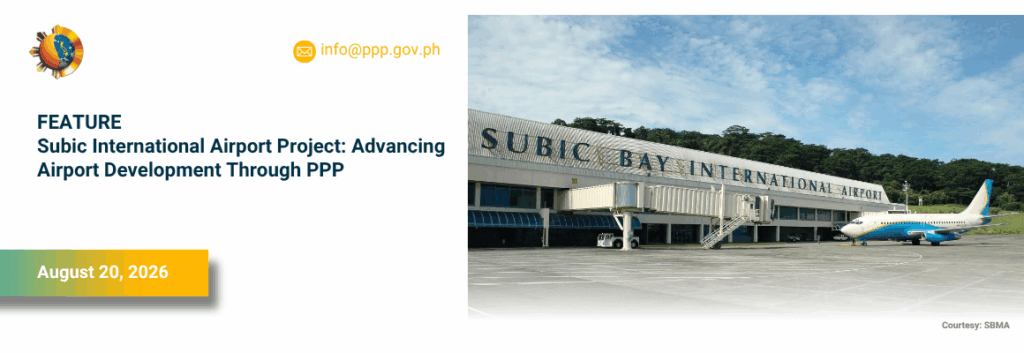
The Subic International Airport (SIA) Project has entered the Comparative Challenge stage pursuant to the unsolicited proposal process established under Republic Act No. 11966 or the Public-Private Partnership (PPP) Code of the Philippines, and its Implementing Rules and Regulations. The government now invites qualified private sector proponents to submit comparative proposals for the modernization, expansion, operation, and maintenance of one of the country’s most strategically located aviation assets.
Through the Comparative Challenge process, the Subic Bay Metropolitan Authority (SBMA) invites interested and qualified local and foreign private sector challengers to submit comparative proposals for the modernization, expansion, operation, and maintenance of one of the country’s strategically located aviation assets.
Beyond an airport modernization initiative, the SIA Project represents a long-term partnership between the government and the private sector to enhance aviation infrastructure, improve operational efficiency, and unlock the strategic potential of one of the Philippines’ key economic gateways.
SIA Project: An Airport Ready for Growth
The Philippines is one of the fastest growing economies in the East Asia and Pacific region, posting a 6.6% compound annual growth rate (CAGR) from 2014 to 2024. Rapid expansion of e-commerce, projected to grow by nearly 10% annually from 2025 to 2029, together with increasing regional trade, is expected to drive air freight demand in Southeast Asia by more than 15% annually through 2030. As airport capacity becomes increasingly constrained, the Philippines is projected to face an air cargo supply gap of approximately 200,000 tonnes, highlighting the need for additional aviation and logistics infrastructure.
Strategically located within the Subic Bay Freeport Zone, the SIA provides a strong platform for future aviation and logistics growth. The airport spans approximately 1.74 million square meters, featuring 502,000 square meters of apron space, 55,000 square meters of hangars and covered facilities, and a 2.7-kilometer asphalt runway capable of accommodating Category E commercial aircraft, including the Boeing 747 and Airbus A350. With its established aviation infrastructure, multimodal connectivity, and capacity to support large aircraft operations, SIA is well positioned to meet the growing demand for air cargo, logistics, and commercial aviation services while supporting the continued development of the Subic Bay Freeport Zone.
Scope of Work
Rehabilitation of Existing Facilities. Most existing structures and interior fit-outs within SIA have deteriorated and require major repairs and refurbishment to restore the assets to full operational conditions. The refurbishment works will include comprehensive upgrades to facilities located on the southwest and southeast aprons, covering the repair and restoration of structural and architectural components, as well as the maintenance and replacement of mechanical and electrical systems, as necessary. All works shall be undertaken in accordance with applicable regulations and safety standards to ensure that the facilities remain functional, safe, and compliant with applicable regulatory requirements.
Operational and Infrastructure Improvements. The Project includes operational and infrastructure improvements aimed at enhancing airport safety, regulatory compliance, and operational efficiency. This includes the Runway End Safety Area (RESA) Improvement Project, which involves extending the existing RESA to comply with established safety standards and providing a larger obstacle-free buffer zone for aircraft safety. The Project also includes coordination with relevant government agencies, including the Civil Aviation Authority of the Philippines (CAAP) for air traffic control and airport safety, and the Philippine Atmospheric, Geophysical and Astronomical Services Administration (PAGASA) for meteorological and hydrological services. Additional operational expenditures during the concession period are expected to include local business taxes, airport management fees, and revenue-sharing obligations payable to SBMA.
Development of New Airport Infrastructure. The Project also includes upgrades, new developments, and the acquisition of equipment to expand airport capacity, improve operational efficiency, and support new service offerings such as commercial cargo and government warehousing operations. Planned developments include new infrastructure projects within SBIA as part of its leasing operations. The Midway Apron Development will be comprised of two warehouse buildings with an approximate combined total floor area of 22,400 square meters and a 32,000-square-meter aircraft staging and parking area. Meanwhile, the North Airport Land Development will cover approximately 88,000 square meters subdivided into four parcels intended for warehouse facilities, a hangar and storage facility, and additional apron space.
SBMA: A Committed Government Partner
As the Implementing Agency, the Subic Bay Metropolitan Authority (SBMA) plays a vital role in ensuring the successful implementation of the SIA Project throughout the concession period.
SBMA will continue to provide key airport support functions, facilitate permits and regulatory coordination, work closely with aviation and government agencies, and assist the private partner in securing the necessary approvals for project implementation. It will also oversee compliance with the concession agreement, coordinate with relevant stakeholders, and help maintain a stable and transparent operating environment for the Project.
With decades of experience in managing and developing the Subic Bay Freeport Zone, SBMA is committed to working hand in hand with the private sector to help deliver a successful project and realize the long-term vision for Subic International Airport.
Why Invest Through a PPP?
The SIA Project offers a compelling opportunity for the private sector to partner with the government in developing one of the Philippines’ most strategic aviation and logistics gateways.
Structured as an Operate-Rehabilitate-Add-Transfer (ORAT) concession under the PPP Code, the Project has an estimated investment cost of PHP 7 billion and provides a 25-year concession period, with a potential extension subject to agreed performance conditions.
Beyond airport operations, the Project presents opportunities to develop diversified revenue streams through regulated and unregulated aeronautical services, cargo handling, warehousing, commercial leasing, logistics services, and other non-aeronautical businesses, enabling the Concessionaire to maximize the airport’s commercial potential.
SIA Project offers a competitive package of fiscal incentives designed to support long-term private sector investment.
Upon registration with the SBMA as an Export Enterprise, the Concessionaire may qualify for a 5% Special Corporate Income Tax (SCIT) for up to 16 years from the start of commercial operations, with the possibility of an extension in accordance with Republic Act No. 12066 and its Implementing Rules and Regulations, subject to applicable eligibility requirements.
Under the SCIT regime, the Concessionaire is exempt from all national and local taxes. In addition, registered Export Enterprises may benefit from exemption from customs duties and Value-Added Tax (VAT) on importations, as well as zero-rated VAT on qualified local purchases, creating a competitive fiscal environment that supports investment, airport modernization, and long-term business growth.
Who May Participate?
The Comparative Challenge for the SIA Project officially commenced on April 27, 2026, with the release of the Instructions to Challengers on July 31, 2026.
The Comparative Challenge is open to interested and qualified local and foreign firms, subject to the eligibility and qualification requirements set forth in the Instructions to Challengers and other applicable laws and regulations.
How to Participate?
Interested local and foreign firms are encouraged to review the Comparative Challenge documents and participate in the comparative challenge process for the SIA Project.
Prospective challengers may secure bid documents and access to related project information by paying the prescribed Participation Fee. Details on the applicable fee, payment procedures, and other participation requirements are provided in the Invitation to Apply for Eligibility and to Submit a Comparative Proposal.
Upon payment of the Participation Fee, prospective challengers will be granted access to the Virtual Data Room (VDR), which contains the complete set of documents, technical information, due diligence materials, and other project-related information necessary for the preparation of comparative proposals.
To stay updated on the latest procurement announcements and project developments, interested parties are encouraged to regularly visit the official websites of the SBMA and the PPP Center of the Philippines (PPP Center). Procurement documents and related information may be accessed through the following resources:
Project Profile: https://ppp.gov.ph/project-dashboard/project-profile/?project=subic-international-airport-project
Project Information Memorandum (PIM): https://ppp.gov.ph/wp-content/uploads/2026/07/SIA-Project_PIM_SBMA.pdf
Invitation for Comparative Proposals: https://ppp.gov.ph/wp-content/uploads/2026/04/SBIA_Inivitation-to-Apply-for-Eligibility.pdf
Instructions to Challengers: https://ppp.gov.ph/wp-content/uploads/2026/07/SIA-Project_ITC_SBMA.pdf
For procurement-related inquiries, interested parties may coordinate with the SBMA SIA Prequalification/Qualification, Bids and Awards Committee (PBAC) through pbac@sbma.com.
For information on the Philippine PPP Program and other PPP investment opportunities, interested parties may also contact the PPP Center of the Philippines (PPP Center) through info@ppp.gov.ph.(#PPPCenterofthePhilippines)


