Visiting USAID Official Highlights U.S.-Philippine Partnership in Health
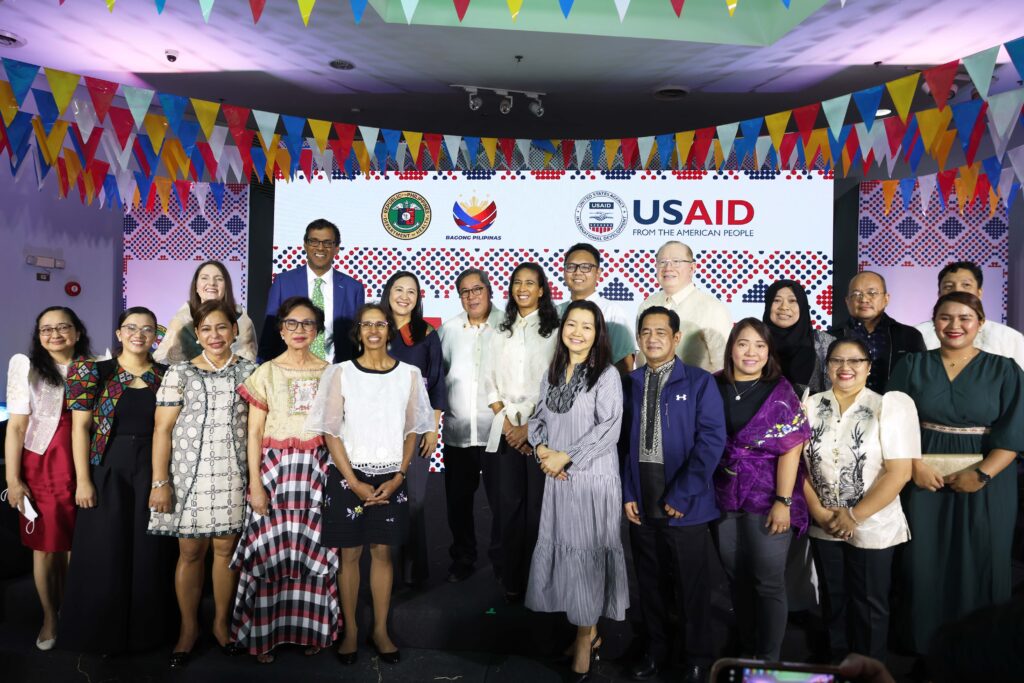
United States Agency for International Development (USAID) Assistant Administrator for Global Health Dr. Atul Gawande visited the Philippines from January 29 to February 1 to reaffirm the partnership between the United States government and the Philippines’ Department of Health (DOH) in strengthening the Philippine health system and addressing health challenges, including the fight against tuberculosis (TB) and HIV.
In Manila, Dr. Gawande met with Philippine Health Secretary Teodoro Herbosa and key government partners to explore ways to strengthen primary health care in line with the Philippines’ Universal Health Care goals. The Philippines is one of seven focus countries for “Primary Impact,” USAID’s global flagship effort to enhance the delivery of primary health care in partner countries. Through this program, USAID supported the DOH and the Philippine Health Insurance Corporation to roll-out Universal Health Care, protecting families from falling into poverty due to health care costs.
“The DOH is honored to be a partner of USAID in strengthening health systems, promoting positive social norms and behaviors, and improving the quality of primary health care,” Secretary Herbosa said at an event commemorating the completion of USAID health programs implemented in the Philippines between 2018 and 2023. “The DOH is committed to our partnership with USAID as we continue to work towards a healthy Philippines.”
“The Philippine government is pursuing an ambitious plan to radically strengthen primary health care—the key scaffolding to enable longer life and better health for all Filipinos,” Dr. Gawande said. “USAID is proud to be a partner in ensuring the plan’s success.”
From 2018 to 2023, USAID invested more than Php14.6 billion ($260 million) in health programs in the Philippines to address TB and HIV, promote family planning, community-based drug rehabilitation, and mental health, and support the country’s COVID-19 response.
USAID’s partnership with the DOH has helped identify more than 750,000 people with TB and linked them to treatment. USAID also helped increase the TB case notification rate by 36 percent between 2022 and 2023.
Through the U.S. President’s Emergency Plan for AIDS Relief (PEPFAR) program, USAID contributed to revolutionizing the Philippines’ HIV response by enrolling more than 24,800 people on pre-exposure prophylaxis (PrEP)—an effective HIV prevention drug—and starting almost half of the country’s HIV treatment clients on the optimized drug regimen, TLD, which has fewer side effects.
To help ensure life-saving medicines and supplies are continuously available, USAID supported the DOH to digitally track their supply chain at national and regional levels. USAID also developed community-based drug rehabilitation treatment protocols for low- and moderate-risk users, and established community-based drug rehabilitation services in 22 local government units.
While in Manila, Dr. Gawande joined the DOH in commemorating World Neglected Tropical Diseases Day on January 30 with the launch of the “Philippine Multi-Disease Elimination Plan,” developed through technical advisory support from USAID. USAID also trained health workers in disseminating information and monitoring cases of Neglected Tropical Disease lymphatic filariasis, a parasitic disease spread by infected mosquitoes that affects the lymph nodes and lymph vessels.
In a keynote lecture to students, faculty, and medical staff at the University of the Philippines Manila, Dr. Gawande emphasized the importance of building strong primary health care systems to contribute to economic development and stability. He later met officials of the National Poison Management and Control Center to discuss the need to address lead poisoning which severely affects the health, development, and learning of children.
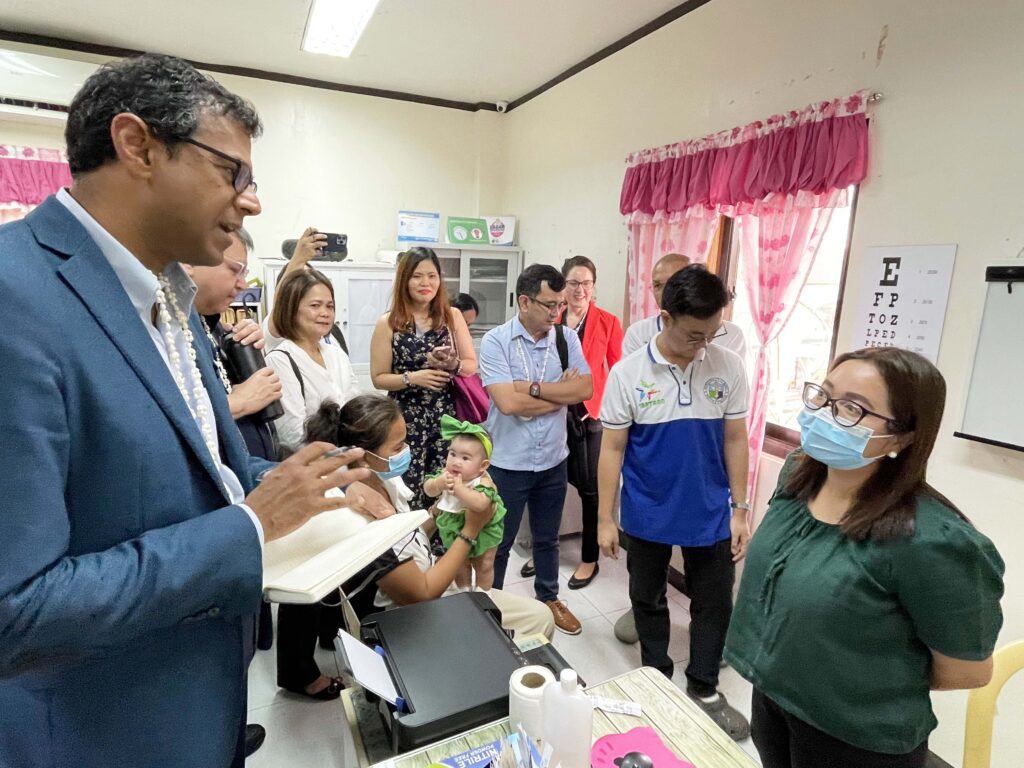
Dr. Gawande also visited health facilities in Quezon City and Bataan where he engaged partner donors, local government officials, and communities to understand challenges and explore opportunities that can bolster Filipinos’ access to quality health care.